By Christian N. Anderson, MD, and Samual Grossman, MS BME.
Investigation performed at Native Orthopaedics Research and Biomechanics Lab, Nashville, Tennessee.
Meniscal root tears (MRTs) are a consequential injury since they render the meniscus functionless, leading to osteoarthritis and poor outcomes. Both clinical and biomechanical studies have shown that static fixation methods lead to rapid and unrecoverable loosening of meniscal root repairs, resulting in high rates of impaired meniscal function, compromised healing, meniscal extrusion, and continued osteoarthritis progression. Furthermore, all-suture devices placed into cancellous bone have also shown unacceptable biomechanical performance when compared with the clinically relevant displacement threshold of 3 mm, above which is commonly indicative of meniscal root repair failure.
The Native Root Repair System uses a novel re-tensionable suture construct that allows the surgeon to overcome the limitations observed with previous fixation methods by providing rigid cortical fixation and allowing removal of viscoelastic creep before final tensioning, with the goal of improving root healing, meniscal function, and long-term clinical and radiographic outcomes.
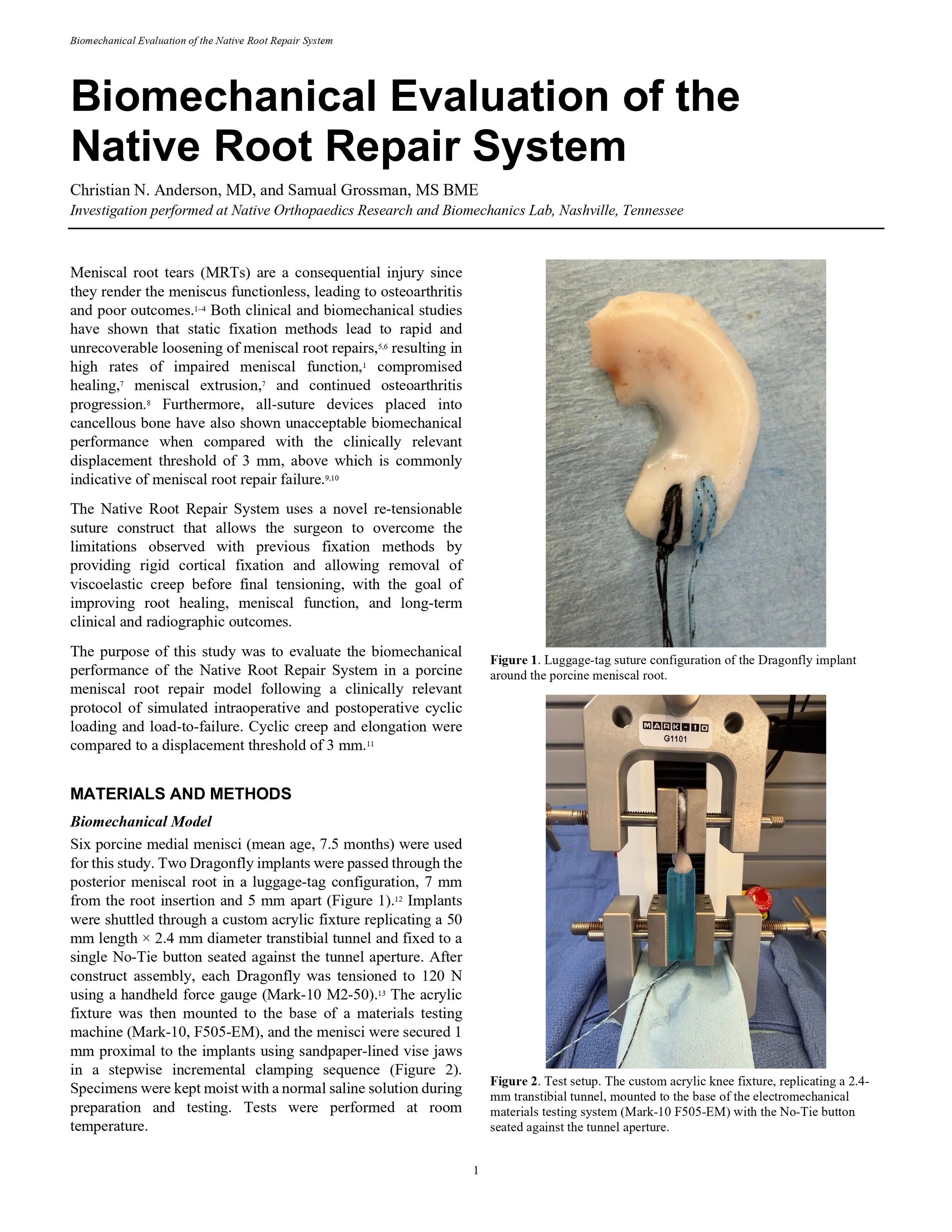
The purpose of this study was to evaluate the biomechanical performance of the Native Root Repair System in a porcine meniscal root repair model following a clinically relevant protocol of simulated intraoperative and postoperative cyclic loading and load-to-failure. Cyclic creep and elongation were compared to a displacement threshold of 3 mm.